Very much appreciate the feedback @RawthiL. I’ll try and address each point 
I have to admit, I don’t understand how everything is working with MINT, so my apologies if I misunderstand something  I’m more of a dynamic spreadsheet guy, where I can try and follow how everything works under the hood… which you are more of a python guy. While it has a price input, it doesn’t seem to balance other parameters automatically from what I can tell. It take a lot of manual changes to account for price, which I’m not sure how to do (hence the yellow). With BASH, changing the price updates all parameters accordingly and maintains the best balance possible (which is what I meant with green).
Right now for MINT, I would just be trusting that others understand how it works, which is why I wanted to see if I can take parts of your model and make it into something that I do fully understand. However it doesn’t produce workable outcomes when I use the spreadsheet, so I’m just going on what the spreadsheet shows.
Yeah, they are the same thing, but I found when trying to explain BASH in my post, I’m constantly having to switch between saying “burn” and “fee”, which can be confusing for some folks. So to make everything clear I just stuck to only using one term, which was burn since that is what it is.
By requiring gateways to burn and stake it doubles the amount of POKT they have have each month, when compared to ARR, as I explained in this section. Requiring more POKT per month fundamentally would effect buy pressure. At 10B relays gateways would need to have 19M POKT in hand each month… which no gateway will have for more than 1 month, even if they have a staking business.
For me, it is safe to say 19M would create significantly more buy pressure than 8.5M.
This is a fundamental flaw with MINT right now. As I mentioned in my comment before, the MINT model doesn’t work for gateways at all.
MINT does get to 0% Annual Emissions Rate at 10B relays, but at a GFPR that is completely impossible for gateways IMO. The cost per relay is almost as much as what PNI charges customers. It would make sense for gateways to use their own hardware (or even ANKR) instead of the POKT protocol.
Every other RPC market is designed where if you bring more relays, you get a discount. MINT proposes the opposite that if you (or some other gateway) brings more relays, each relay gets more expensive. For me that concept itself is a no go.
Relays need to stay at $.00000085 to be competitive to running off of your own infra. POKT’s economic model needs to take the game theory of gateways into account, and BASH and ARR are designed to do that.
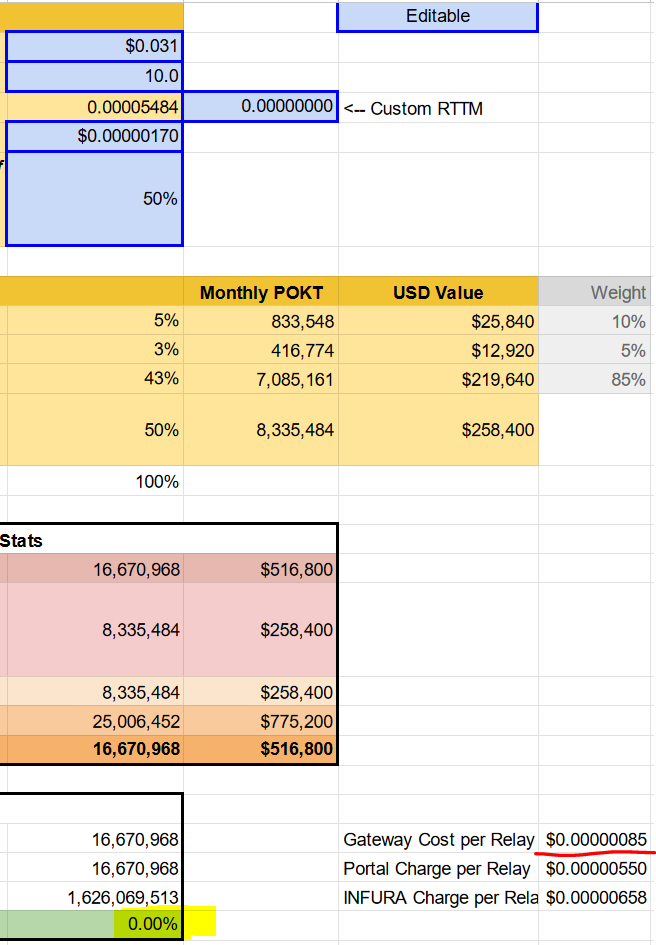
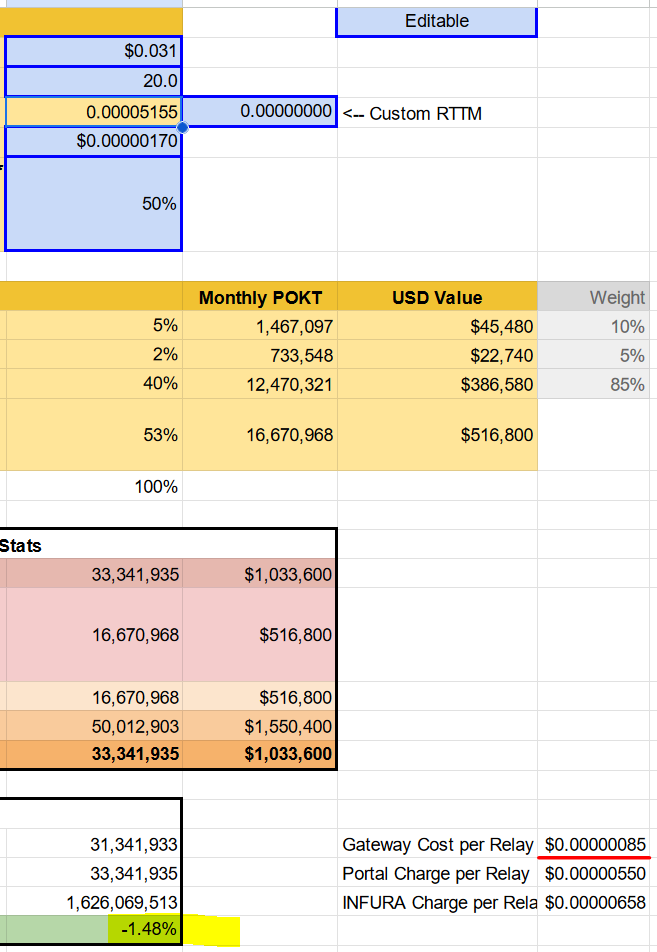
For contrast, this is BASH with 10B relays and 20B relays while still being deflationary, grown node rewards, requiring double the buy pressure, and consistent (and reasonable) USD costs for gateways.
Wow… this section makes me look really smart! I’ve never seen one of my spreadsheets “in the greek” 
Seriously, great job breaking it down the mathematics. Though I may get lost in it, it is great to know that someone is really breaking things down.
Where are you seeing large discrepancies or large earning differences between 9.99999B relays and 10B relays? Please show screenshots, because that is not what is in the model from what I can see.
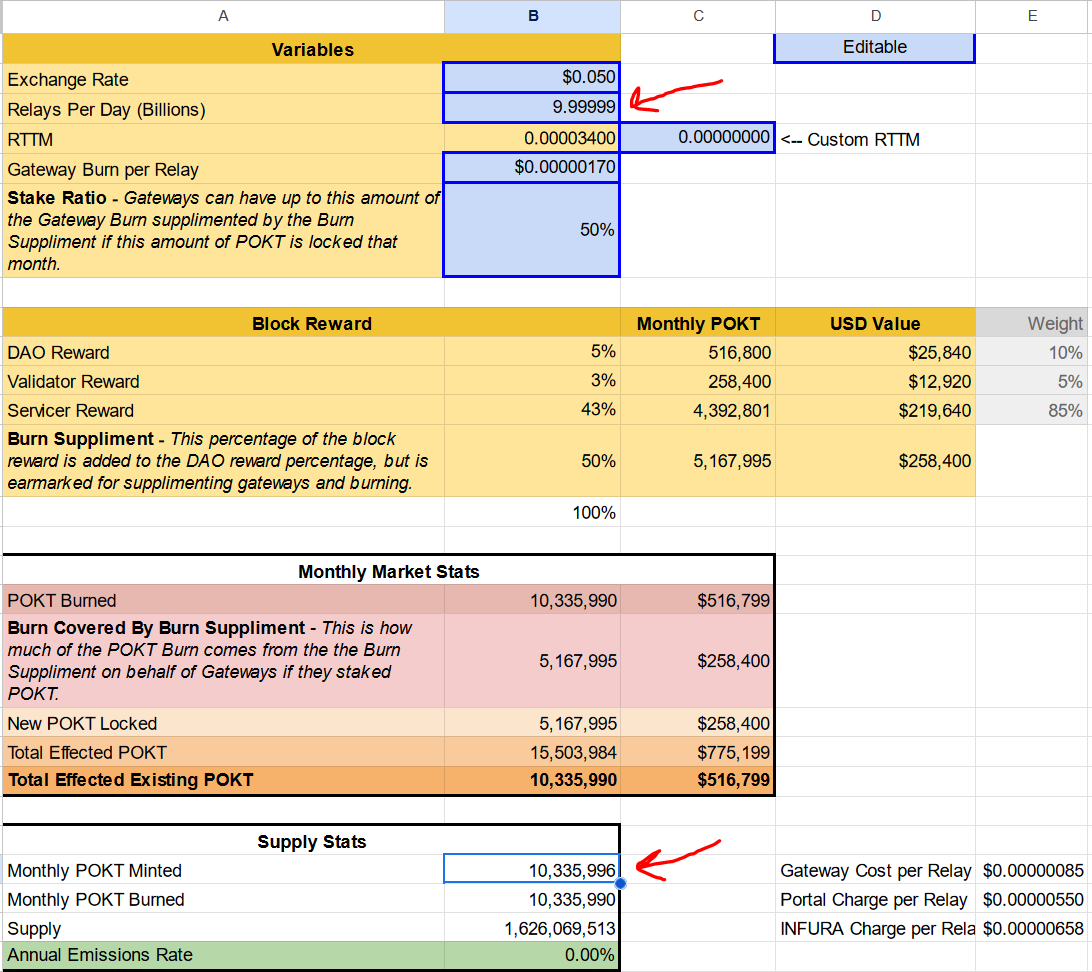
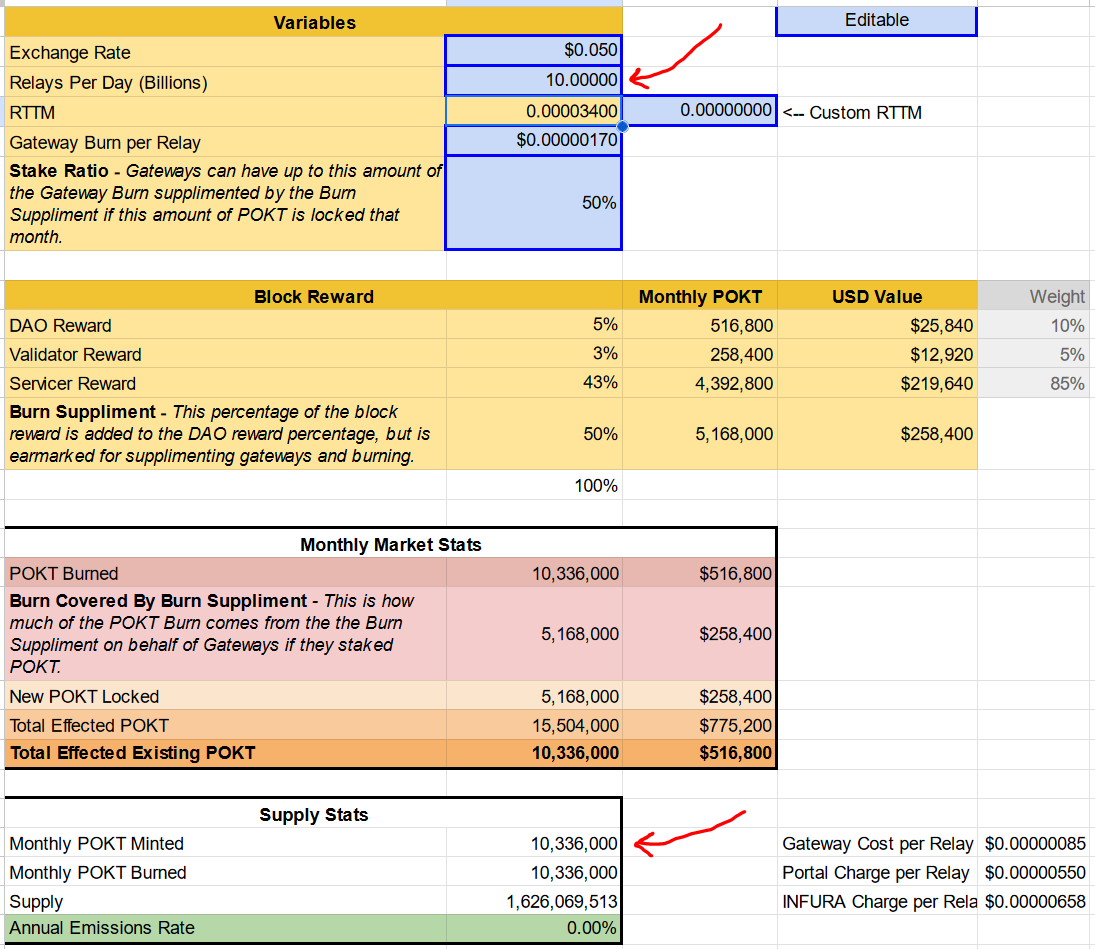
From what I can see, BASH perfectly hits it’s goals without any radical changes, regardless of where POKT price or relays go. Please show screenshots of the spreadsheet because I believe your python scripts are wrong.
Yep, the whole thing is hard coded to hit specific goals. I went into it with these goals
 Deflationary by 10B relays a day
Relay growth can expand node ecosystem
Consistent USD cost per relay for gateways (very important)
Accounts for POKT price
Direct buy pressure incentive
Staking Incentive
Just like SER and ARR have hardcoded elements to them, so does BASH. However BASH took many of it’s design ques from PNF (their desire to hit sub 5% Annual Emissions Rate ASAP, be deflationary at 10B, and constant USD price per relay), while adding other goals that I feel are worth taking into consideration (POKT price, growing nodes, additional buy pressure).
V1 is the opportunity to limit the amount of hard coded goals needed, but for POKT in this market, the it’s very important to account for as many elements as possible… hence my attempt at BASH.